
Key takeaways
Giovanni Ferrero, the renowned Italian businessman behind Nutella, once remarked: “Tradition is like a bow. The more we stretch the bow string, the farther we can throw the arrows of modernity and innovation.” In today’s era of climate urgency, his words ring truer than ever. The world’s transition to renewable energy is not just a matter of choice but a pressing necessity—one that governments, industries, and individuals are actively embracing to address the challenges and seize the opportunities of a rapidly changing planet.
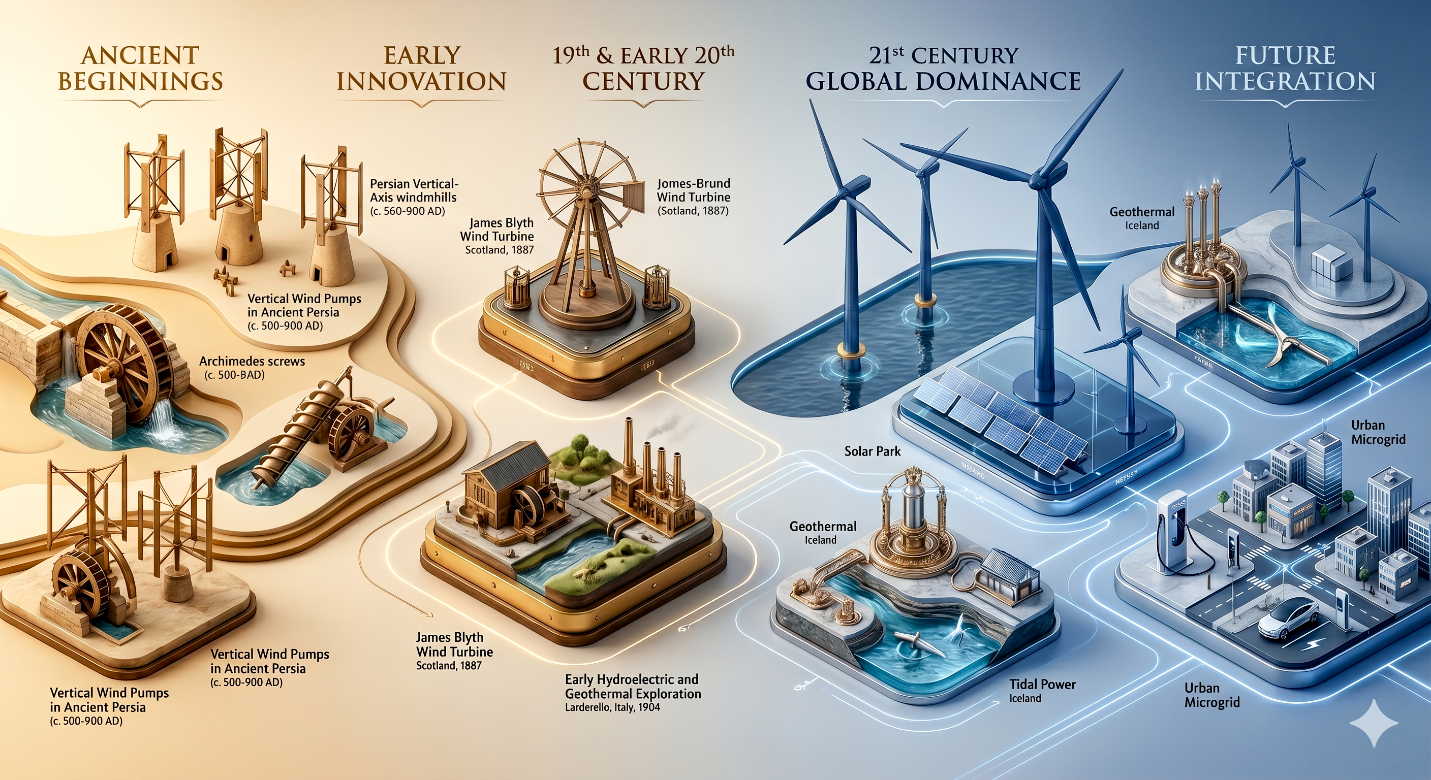
From Ancient Ingenuity to Industrial Shifts
The story of renewable energy is deeply interwoven with human progress. Thousands of years ago, ancient civilizations demonstrated remarkable creativity in harnessing natural forces:
- Egyptians used wind to power sailboats along the Nile, revolutionizing transportation and trade.
- Greeks and Chinese invented waterwheels and early windmills to grind grain and pump water, providing essential mechanical power.
However, the Industrial Revolution of the 18th and 19th centuries shifted the energy paradigm. Coal and oil became the dominant sources, pushing renewables to the margins. Yet innovation continued—by the late 19th century, the first wind turbines had been developed, and the groundwork for modern electricity generation was laid.
Harnessing the Sun: Early Breakthroughs and Modern Milestones
Human fascination with solar energy stretches back to antiquity:
- Greeks and Romans used burning mirrors to concentrate sunlight for ceremonial fires.
- In 1767, Horace-Bénédict de Saussure invented the world’s first solar collector, which later inspired the development of solar cookers.
- The late 19th century saw the advent of commercial solar water heaters and the development of the first solar cell, enabling direct conversion of sunlight into electricity.
Crises as Catalysts: The Push for Renewables
The energy crises of the 1970s exposed the vulnerabilities of fossil fuel dependence. Oil shortages and price shocks prompted governments to invest in solar and wind research, laying the foundation for today’s renewable energy landscape. The urgent threat of climate change in the 21st century has since accelerated this progress, making clean energy a global imperative.
The Renewable Boom: 21st Century Transformation
The 2000s marked a dramatic surge in renewable energy, driven by technological advancement and policy support:
- China’s massive investments in solar and wind led to record-breaking installations worldwide.
- Renewables now supply over 30% of global electricity, with solar and wind emerging as the most cost-effective new sources.
- Urbanisation, electric vehicles, data centres, and digital services are driving unprecedented electricity demand.
Why Renewable Energy is the Solution
Renewable energy stands out as the clear way forward, bringing multiple advantages:
- Cleaner: Reduces greenhouse gas emissions and air pollution.
- Affordable: Technology costs are falling rapidly, making renewables cheaper than fossil fuels in many regions.
- Locally Sourced: Reduces reliance on imported fuels and enhances energy security.
- Broad Support: Backed by governments, investors, and the public for its environmental and economic benefits.
Many nations now view renewables not just as an environmental choice, but as a strategic asset for economic growth and stability.
Technological Progress: Efficiency and Digitalization
Innovations in renewable technology are making a profound impact:
- High-efficiency solar cells extract more power from sunlight.
- Larger, more advanced wind turbine blades capture more energy, even in low-wind conditions.
Smart Grids and Digital Energy:
- Smart grids utilize sensors, software, and real-time analytics to optimize electricity flow, reduce losses, and quickly detect faults.
- Artificial intelligence and data analytics enable better demand forecasting and grid management.
These advancements help integrate renewables more reliably into the grid and support the rising electricity needs of modern economies.
The Road Ahead: Priorities for the Future
Looking beyond 2026, the future of renewable energy is bright, with technology, policy, and public awareness all driving continued growth. Key areas of focus include:
- Large-Scale Energy Storage: To ensure round-the-clock power from intermittent sources like solar and wind.
- Grid Modernization: Upgrading infrastructure to accommodate distributed and variable renewable energy.
- Clean Fuels: Developing green hydrogen and other clean alternatives for sectors difficult to electrify.
- Sector Integration: Expanding renewable energy into transportation, industry, and heating.
Emerging economies like India are poised to play a pivotal role by leveraging renewables to fuel economic development while reducing emissions.
Conclusion: Innovation for a Sustainable Future
The evolution of renewable energy is a testament to humanity’s adaptability and creative spirit. As climate challenges intensify, embracing renewables is about shaping a sustainable future, not simply following trends. By learning from our past and pushing the boundaries of innovation, we can continue to stretch the bow of tradition—launching the arrows of progress toward a cleaner, brighter tomorrow.