What is Captive Renewable Power?
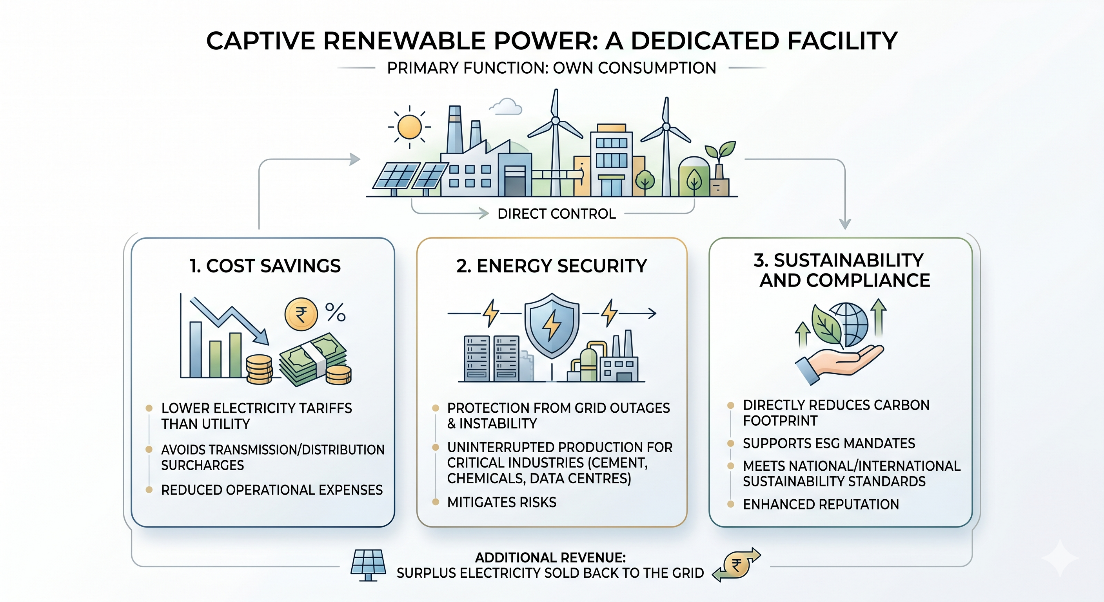
Captive renewable power is electricity generated by a facility—such as a solar, wind, or biomass plant—built and operated directly by an industrial or commercial enterprise. Instead of relying solely on the public grid, these businesses generate their own power for self-consumption. This approach offers companies unparalleled control over energy costs, supply reliability, and sustainability. Additionally, if the facility produces surplus electricity, it can often be sold back to the grid, providing a new revenue stream and further enhancing the economic case for captive generation.
Common Captive Renewable Power Models in India
1. On-Site Generation: Businesses install solar panels (rooftop or ground-mounted) or wind turbines at their facility. These systems are often paired with battery storage to provide backup during nights or cloudy weather, ensuring continuous operations and optimal use of renewable resources.
2. Off-Site / Group Captive Projects: Multiple industrial or commercial users jointly invest in a remote renewable energy project. Indian law requires each participant to hold at least a 26% equity stake and together consume at least 51% of the power produced. This model is ideal for businesses that lack space for on-site generation but want the benefits of renewable power at scale.
3. Hybrid Captive Plants: These advanced systems blend renewable energy sources (solar, wind) with backup solutions such as batteries or natural-gas generators. By integrating these technologies, hybrid captive plants guarantee stable, round-the-clock (RTC) power, overcoming the intermittency of renewables and ensuring reliability even in challenging weather or grid conditions.
Why More Industries Are Choosing Captive Renewable Power
1. Significant Cost Savings: Captive generation usually delivers electricity at a much lower cost than standard state utility tariffs. By generating their own power, businesses can avoid additional transmission and distribution charges, resulting in substantial operational savings over time.
2. Enhanced Energy Security: Self-generation shields industries against unpredictable grid outages and power-quality fluctuations. Sectors such as cement, chemicals, and data centres—where downtime can be extremely costly—particularly benefit from the consistent, reliable supply provided by captive power.
3. Sustainability and ESG Leadership: Captive renewables play a crucial role in helping companies reduce their carbon emissions and comply with environmental, social, and governance (ESG) standards. This commitment strengthens their brand reputation and appeals to investors, customers, and regulators both in India and globally.
Industry Adoption & Regional Leadership
India’s supportive regulatory framework—especially the Electricity Act—empowers industries to develop captive power projects. This trend is most pronounced in states with strong manufacturing bases and progressive renewable energy policies, such as Gujarat, Maharashtra, and Tamil Nadu. These regions offer attractive incentives, simplified approval processes, and dedicated support, making them hotspots for captive renewable adoption.
Selecting the most suitable captive power model involves considering factors like resource availability, energy demand, technology options, site space, and the company’s long-term sustainability objectives.
• India’s total installed captive power capacity reached 80,926.3 MW in 2023-24, highlighting the major contribution of captive generation to the country’s energy mix.
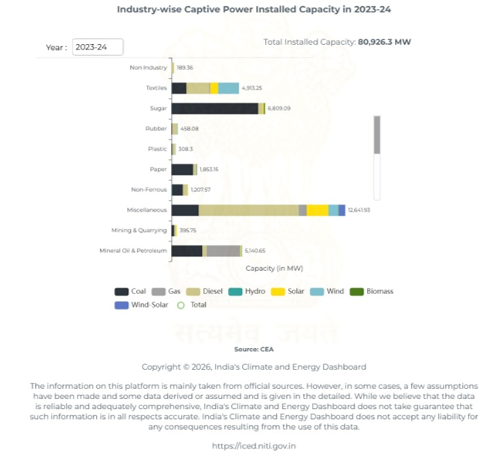
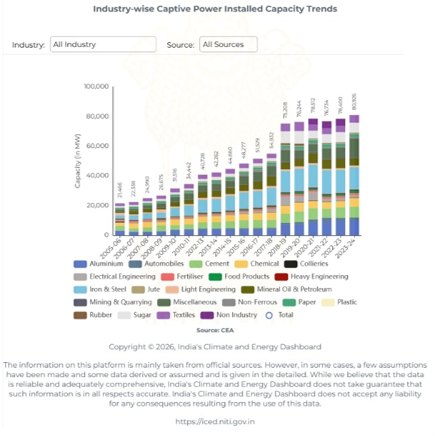
• While diesel-based captive plants currently hold the largest share (35%) globally, Indian industry is rapidly shifting towards renewables (solar, wind, biomass) and gas-based systems as cleaner, more sustainable alternatives.
• Large captive plants (above 25 MW) can generate electricity for under INR 5.0/kWh—substantially below typical industrial grid tariffs, which can exceed INR 8.0/kWh. This cost gap further incentivizes businesses to invest in captive generation, especially as they often subsidize residential users through higher discom tariffs.
Looking Forward: Incentives, Opportunities, and Challenges
The Indian government continues to encourage captive renewable energy through incentives such as reduced wheeling and banking charges, and net metering schemes that credit businesses for surplus energy sent to the grid. As decentralized renewable generation expands, more companies are expected to shift to captive models, seeking both cost savings and sustainability.
However, this transition also challenges discoms, as reduced industrial demand can impact their revenues. Utilities must adapt by modernizing infrastructure and innovating their distribution models to remain viable in an evolving energy ecosystem.
At Prozeal Green Energy, we help companies design and execute end-to-end solar and wind-solar hybrid projects with BESS. These have helped companies in the chemicals, Textiles, Pharma, and FMCG sectors reduce their carbon footprints.
Conclusion: The Future of Industrial Power is Captive and Renewable
Captive renewable power is reshaping the energy strategy of Indian industry. By investing in self-owned clean energy projects, companies are gaining unprecedented control over their power costs, boosting operational reliability, and leading the way in sustainability. As technologies advance and policies continue to support green growth, captive renewables are set to play a foundational role in India’s industrial progress and its journey toward a greener, more resilient future.
Sources: Central Electricity Authority (CEA), industry reports